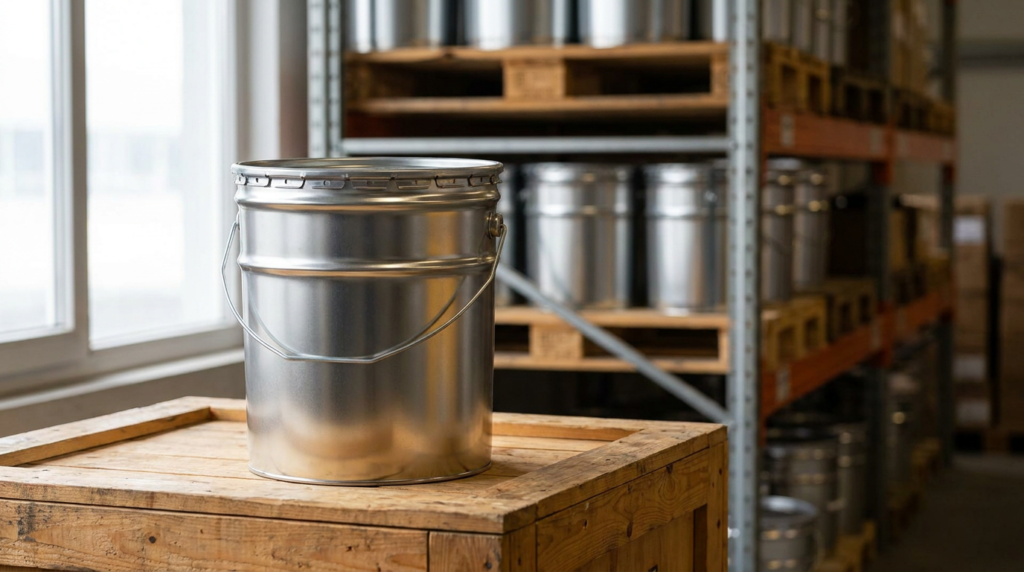
Every steel drum, plastic drum, jerrican, and box that ships dangerous goods by air, sea, road, or rail must display a UN packaging code. The code is a compact string of characters that tells the carrier, the customs inspector, and the dangerous goods handler everything they need to know about the package: what it is made of, what it is designed to contain, what hazard level it is rated for, and who made it.
If you source, specify, or inspect UN packaging, you need to read these codes fluently. A misread UN code is the difference between a shipment that moves through customs in 24 hours and a shipment that sits on a dock for 2 weeks while the inspector figures out what was wrong with the marking.
This guide decodes every part of the UN packaging code, provides a complete chart of common UN codes you will encounter in the dangerous goods packaging market, and gives you 5 worked examples of real markings you will see on the drums, jerricans, and boxes arriving at your warehouse.
All data is from the UN Recommendations on the Transport of Dangerous Goods (the Orange Book, 21st revised edition, 2019, with 2023 amendments) and from our factory experience at Suzhou Jinqiao Packaging (40-person operation, exporting UN-rated steel and plastic packaging to 30+ countries since 2008).
The UN Packaging Code Structure
A complete UN packaging marking is composed of several parts. The full marking reads like this:
UN 1A1/Y1.4/100/06/CH/NNNN
Each part of this string tells you something specific:
Part 1: The UN Symbol
The string always starts with the letters "UN" in capital letters, inside a circle or as plain text depending on the printing method. This identifies the marking as a UN packaging code under the Recommendations on the Transport of Dangerous Goods.
UN
Part 2: Packaging Type Code (1 digit)
The first digit is the packaging type:
| Code | Packaging type |
|---|---|
| 1 | Drum (cylindrical, flat or curved ends) |
| 2 | Reserved (originally wooden barrel) |
| 3 | Jerrican (rectangular with handle) |
| 4 | Box |
| 5 | Bag |
| 6 | Composite packaging |
| 7 | Pressure receptacle |
For the chemical packaging market, you will most commonly see 1 (drum), 3 (jerrican), and 4 (box).
Part 3: Material Code (1 letter)
The first letter after the type code identifies the material:
| Code | Material |
|---|---|
| A | Steel (carbon) |
| B | Aluminum |
| C | Natural wood |
| D | Plywood |
| F | Reconstituted wood |
| G | Fiberboard |
| H | Plastic |
| L | Textile |
| M | Multi-wall paper |
| N | Metal other than steel or aluminum |
| P | Glass, porcelain, or stoneware |
For most chemical packaging buyers, the materials you will encounter are A (steel), B (aluminum), H (plastic), and occasionally G (fiberboard) for outer packaging in combination packs.
Part 4: Head Design Code (1 digit, for drums and jerricans only)
For drums (1) and jerricans (3), the third character is the head design:
| Code | Head design |
|---|---|
| 0 | Not applicable (for non-drum/jerrican packaging) |
| 1 | Non-removable head (top permanently sealed) |
| 2 | Removable head (top can be removed for filling/access) |
So:
- 1A1 = Steel drum with non-removable head
- 1A2 = Steel drum with removable head
- 1H1 = Plastic drum with non-removable head
- 1H2 = Plastic drum with removable head
- 3A1 = Steel jerrican with non-removable head
- 3A2 = Steel jerrican with removable head
The head design matters for filling logistics, cleaning, and reuse. See our UN 1A1 vs 1A2 guide for a detailed comparison.
Part 5: Packing Group Compatibility
After the type-material-head code, the marking includes the packing group compatibility:
| Code | Packing Group(s) |
|---|---|
| X | Packing Groups I, II, and III (high, medium, low danger) |
| Y | Packing Groups II and III (medium and low danger) |
| Z | Packing Group III only (low danger) |
This is one of the most critical parts of the code to read correctly. A drum marked "X" can be used for high-hazard dangerous goods (Packing Group I). A drum marked "Y" can only be used for medium or low hazard. A drum marked "Z" can only be used for low hazard.
Using a Y-rated drum for a Packing Group I product is a regulatory violation and a customs rejection waiting to happen.
Part 6: Specific Gravity or Vapor Pressure Rating
After the packing group, the marking includes either:
- A specific gravity rating (for liquids): the maximum specific gravity the drum is tested for (e.g., 1.4 means the drum is tested with a liquid of specific gravity 1.4)
- A vapor pressure rating (for gases and some liquids): the maximum vapor pressure in kPa at 50°C
For most liquid chemical packaging, the specific gravity rating is shown. The drum must be used only for products with specific gravity at or below the marked value.
Part 7: Test Pressure (kPa)
The hydraulic pressure test value, in kPa, that the drum design passed during certification:
| Common values | Typical application |
|---|---|
| 30 kPa | Low-pressure liquids, viscous products |
| 100 kPa | Standard liquids, most chemicals |
| 250 kPa | Higher pressure applications, some solvents |
| 500+ kPa | High-pressure applications (special cases) |
The test pressure is the pressure the drum design was tested at, not the maximum working pressure. The actual safety margin is typically 2-3x.
Part 8: Year of Manufacture
Two-digit year code:
- 24 = 2024
- 25 = 2025
- 26 = 2026
- etc.
The year of manufacture matters because UN certifications typically have a validity period (usually 5 years), and the design must be re-tested if the manufacturing process changes.
Part 9: Country Code
Two-letter ISO country code where the manufacturer is located:
- CN = China
- US = United States
- DE = Germany
- CH = Switzerland
- JP = Japan
- etc.
Part 10: Manufacturer Code
The manufacturer's own code or registration number as assigned by the competent authority. This varies by country and manufacturer.
Complete UN Packaging Code Chart
Below is the comprehensive chart of UN packaging codes for the most common packaging types and materials. Use this as a quick reference when you encounter a UN code in the field.
| Code | Type | Material | Head | Common use |
|---|---|---|---|---|
| 1A1 | Drum | Steel | Non-removable | Most liquid chemicals, paints, solvents |
| 1A2 | Drum | Steel | Removable | Viscous chemicals, semi-solids, limited reuse |
| 1B1 | Drum | Aluminum | Non-removable | Light-sensitive chemicals, aerospace |
| 1B2 | Drum | Aluminum | Removable | Specialty chemicals, light-sensitive viscous |
| 1H1 | Drum | Plastic | Non-removable | Acids, alkalis, water-based chemicals |
| 1H2 | Drum | Plastic | Removable | Plastic-compatible viscous products |
| 1N1 | Drum | Metal (other) | Non-removable | Specialty applications |
| 1N2 | Drum | Metal (other) | Removable | Specialty applications |
| 1G | Drum | Fiberboard | N/A | Inner drum in combination pack |
| 1D | Drum | Plywood | N/A | Specialty applications |
| 1M | Drum | Multi-wall paper | N/A | Inner drum in combination pack |
| 3A1 | Jerrican | Steel | Non-removable | Smaller volume liquids, retail chemicals |
| 3A2 | Jerrican | Steel | Removable | Viscous products in smaller volumes |
| 3B1 | Jerrican | Aluminum | Non-removable | Specialty smaller-volume applications |
| 3B2 | Jerrican | Aluminum | Removable | Light-sensitive viscous products |
| 3H1 | Jerrican | Plastic | Non-removable | Plastic-compatible liquids, retail |
| 3H2 | Jerrican | Plastic | Removable | Plastic-compatible viscous products |
| 4A | Box | Steel | N/A | Specialty packaging for solid dangerous goods |
| 4B | Box | Aluminum | N/A | Specialty |
| 4C | Box | Natural wood | N/A | Inner box in combination pack |
| 4D | Box | Plywood | N/A | Inner box in combination pack |
| 4F | Box | Reconstituted wood | N/A | Inner box |
| 4G | Box | Fiberboard | N/A | Most common box material |
| 4H | Box | Plastic | N/A | Specialty applications |
| 4N | Box | Metal (other) | N/A | Specialty |
| 5H1 | Bag | Plastic | N/A | Plastic bag (inner) |
| 5H2 | Bag | Plastic | N/A | Plastic bag (outer) |
| 5H3 | Bag | Plastic | N/A | Plastic bag (waterproof) |
| 5L | Bag | Textile | N/A | Textile bag |
| 5M | Bag | Paper | N/A | Multi-wall paper bag |
| 6HA1 | Composite | Plastic+Steel | N/A | Plastic inner with steel outer |
| 6HA2 | Composite | Plastic+Steel | N/A | Plastic inner with steel outer (removable head) |
| 6HH1 | Composite | Plastic+Plastic | N/A | Plastic inner with plastic outer |
| 6HH2 | Composite | Plastic+Plastic | N/A | Plastic inner with plastic outer (removable) |
| 6PA1 | Composite | Plastic+Aluminum | N/A | Plastic inner with aluminum outer |
| 6PB1 | Composite | Plastic+Aluminum | N/A | Plastic inner with aluminum outer |
The codes 1A1, 1A2, 1H1, 1H2, 3A1, 3A2, 4G, and 4H cover approximately 85% of dangerous goods packaging in industrial chemistry. The composite codes (6xx) are for combination packaging (inner plastic or glass container inside a rigid outer).
Five Worked Examples: Decoding Real Markings
Example 1: A Standard Paint Drum
Marking on the drum: UN 1A1/Y1.4/100/24/CN/ABCD123
Decoded:
- UN = UN packaging code
- 1A1 = Steel drum, non-removable head
- Y = Packing Group II or III (medium or low hazard)
- 1.4 = Tested with liquid of specific gravity 1.4 (suitable for most paints, solvents, resins)
- 100 = Test pressure 100 kPa
- 24 = Manufactured in 2024
- CN = China
- ABCD123 = Manufacturer code
This is a typical 200L paint drum. It can be used for Packing Group II or III flammable liquids or corrosives with specific gravity up to 1.4. It cannot be used for Packing Group I high-hazard goods.
Example 2: A High-Hazard Solvent Drum
Marking on the drum: UN 1A1/X1.2/250/23/CN/WXYZ456
Decoded:
- UN = UN packaging code
- 1A1 = Steel drum, non-removable head
- X = Packing Groups I, II, and III (high, medium, low hazard)
- 1.2 = Tested with liquid of specific gravity 1.2 (lighter solvents)
- 250 = Test pressure 250 kPa (higher pressure for volatile solvents)
- 23 = Manufactured in 2023
- CN = China
- WXYZ456 = Manufacturer code
This is a heavy-duty drum for high-hazard volatile solvents (Packing Group I). The 250 kPa test pressure is significantly higher than the standard 100 kPa, indicating the drum is designed for products that generate significant internal pressure.
Example 3: A Plastic Drum for Acid
Marking on the drum: UN 1H1/Y1.6/100/25/CN/PLAS789
Decoded:
- UN = UN packaging code
- 1H1 = Plastic drum, non-removable head
- Y = Packing Group II or III
- 1.6 = Tested with liquid of specific gravity 1.6 (suitable for concentrated acids and heavy corrosive liquids)
- 100 = Test pressure 100 kPa
- 25 = Manufactured in 2025
- CN = China
- PLAS789 = Manufacturer code
This is a plastic drum for concentrated acids or heavy corrosive liquids. The high specific gravity rating (1.6) and plastic material indicate it is for products that would attack steel. Common applications: sulfuric acid, hydrochloric acid, certain heavy alkaline cleaners.
Example 4: A Composite Packaging (Plastic in Steel Drum)
Marking on the drum: UN 6HA1/Y1.4/100/24/CN/COMP012
Decoded:
- UN = UN packaging code
- 6HA1 = Composite packaging: plastic inner receptacle with steel outer drum, non-removable head
- Y = Packing Group II or III
- 1.4 = Tested for inner receptacle liquid of specific gravity 1.4
- 100 = Test pressure 100 kPa
- 24 = Manufactured in 2024
- CN = China
- COMP012 = Manufacturer code
This is a composite packaging: a plastic bottle or jerrican inside a steel drum. The plastic inner protects the product from steel contact (and vice versa), and the steel outer provides the structural strength. Common applications: food-grade products, pharmaceutical intermediates, specialty chemicals requiring both chemical compatibility and structural strength.
Example 5: A Fiberboard Box for Solid Dangerous Goods
Marking on the box: UN 4G/Y25/S/24/CN/BOX345
Decoded:
- UN = UN packaging code
- 4G = Fiberboard box
- Y = Packing Group II or III
- 25 = Maximum gross mass 25 kg (for solid dangerous goods, the mass rating is shown instead of specific gravity)
- S = Designates packaging for solids (in contrast to liquids)
- 24 = Manufactured in 2024
- CN = China
- BOX345 = Manufacturer code
This is a fiberboard box for solid dangerous goods (powders, granules, tablets) up to 25 kg gross mass. Common applications: solid catalysts, dry chemical intermediates, certain pigment products.
Performance Tests Behind the Marking
A UN packaging code is not just a label — it represents a specific set of performance tests the packaging design has passed. The standard test suite includes:
| Test | What it tests | Typical pass criteria |
|---|---|---|
| Drop test | Impact resistance during handling | Drop from 0.6-1.8m (depending on Packing Group) without leakage |
| Leakproofness | Seal integrity at low pressure | 20 kPa internal pressure for 5-10 minutes, no leakage |
| Internal hydraulic pressure | Pressure resistance for liquids | Test pressure (e.g., 100 kPa) for 30 minutes, no deformation |
| Stacking | Compression resistance | 3m stack equivalent for 28 days, no top-load deformation |
| Vibration (PG I only) | Transport vibration | 1 hour at 1g RMS, no leakage |
| Low-temperature drop (PG I only) | Cold-temperature brittleness | Drop at -18°C, no cracking or leakage |
A drum that passes all six tests for Packing Group I is the most rigorously tested. Most chemical packaging buyers do not need PG I capability — PG II covers the majority of industrial chemical products.
Common Mistakes Reading UN Codes
After 18 years of UN packaging production, the most common reading errors are:
Misreading the Packing Group Letter
The most consequential error. X, Y, and Z are not interchangeable. A Y drum cannot be used for PG I products, regardless of specific gravity or test pressure.
Ignoring the Specific Gravity Rating
A drum marked for specific gravity 1.4 cannot be safely used for a product with specific gravity 1.8. The drop test was performed with a test liquid of specific gravity 1.4, and the design may not have been qualified for heavier products.
Confusing Test Pressure with Working Pressure
The test pressure is the qualification test value, not the working pressure limit. A 100 kPa test pressure drum has a working pressure limit of approximately 30-50 kPa, with a 2-3x safety factor.
Treating the Year of Manufacture as Optional
The year code is part of the UN marking. Without it, the marking is incomplete and the drum is not valid for dangerous goods transport.
Misinterpreting Composite Codes
6xx codes (composite packaging) have an inner and outer component. The "A" or "H" in the middle of the code indicates the outer material, and the inner material is shown first. A 6HA1 is plastic-in-steel; a 6AH1 would be steel-in-plastic (less common).
How to Verify a UN Marking
When you receive UN-rated packaging, the following verification steps are standard:
- Visual check: The marking is permanent (engraved, stamped, or printed with permanent ink). Some suppliers offer stickers, which are not UN-compliant.
- Marking location: For drums, the marking is typically on the top or side of the body. For boxes, on the side or top panel.
- Marking content: All required elements are present (UN symbol, type, material, head, packing group, spec gravity/pressure, year, country, manufacturer).
- DoC verification: The shipment includes a Declaration of Compliance referencing the same Design Type Approval as the marking.
- Test report: A test report from an accredited test lab is on file with the manufacturer and can be provided on request.
How We Help Buyers Read and Verify UN Codes
At Suzhou Jinqiao Packaging, we provide the following UN packaging documentation for every shipment:
- Permanent UN marking on every drum (engraved or stamped, not stickers)
- DoC with each shipment, referencing the same Design Type Approval as the marking
- Test reports from accredited labs (TUV, SGS, Bureau Veritas) for our current UN Design Type Approvals
- Direct technical support to help you decode the marking if you have a question about a specific drum
If you have a UN code in front of you and you are not sure what it means, send it to us via WhatsApp (+86 178 2667 5627) and we will decode it for you within 24 hours.
Related Reading
For more depth on related topics, see our other guides:
- UN 1A1 vs 1A2: What's the Difference
- UN Approved vs Non-UN: What You Need to Export Dangerous Goods
- EU PPWR 2025/40 Compliance Guide
- 5-Gallon Steel Pail Internal Coatings
- 25L Food-Grade Steel Pail
- Round vs Square 20L Steel Pail
- 5-Gallon Steel Pail Wire Handle: 3.5mm vs 3.8mm
- Tinplate Thickness for Metal Cans
Talk to Us About UN Packaging
If you are a chemical, petrochemical, or specialty chemical buyer and you need help reading, verifying, or sourcing UN packaging, we can help. We are a Suzhou-based UN packaging manufacturer with Design Type Approvals across Packing Groups I, II, and III for steel and plastic drums in standard volumes from 30L to 220L.
Reach out via the form on our contact page, or message us on WhatsApp (+86 178 2667 5627). For technical discussions on Design Type Approval, packing group compatibility, or destination market compliance, email joey@szjqpack.com with your UN Class, Packing Group, and target market.
The UN code is a compact language that tells you everything about a package. Learn to read it fluently, and you will save yourself countless customs holds, regulatory citations, and missed delivery dates.