Shipping hazardous chemicals in improper packaging can result in rejected shipments, leaks, fines, and safety risks. Many buyers only realize the importance of UN certification after facing export problems or damaged cargo.
UN rated packaging is certified packaging specifically designed to safely transport hazardous materials.[^1] It must pass stringent tests for impact resistance, leak prevention, stacking strength, and internal pressure[^2] to ensure safe transportation.
Understanding UN rated packaging is essential for chemical exporters. Let’s explore what it really means, how it’s tested, and how to choose the right packaging for your product.
What Does “UN Rated Packaging” Actually Mean?
Shipping hazardous chemicals without certified packaging is risky and illegal in many cases. Many buyers see UN codes on metal drums but do not fully understand their significance.
UN rated packaging refers to packaging tested and certified under United Nations regulations for transporting hazardous materials.[^3] It is designed to ensure chemical safety during road, sea, rail, or air transportation[^4].
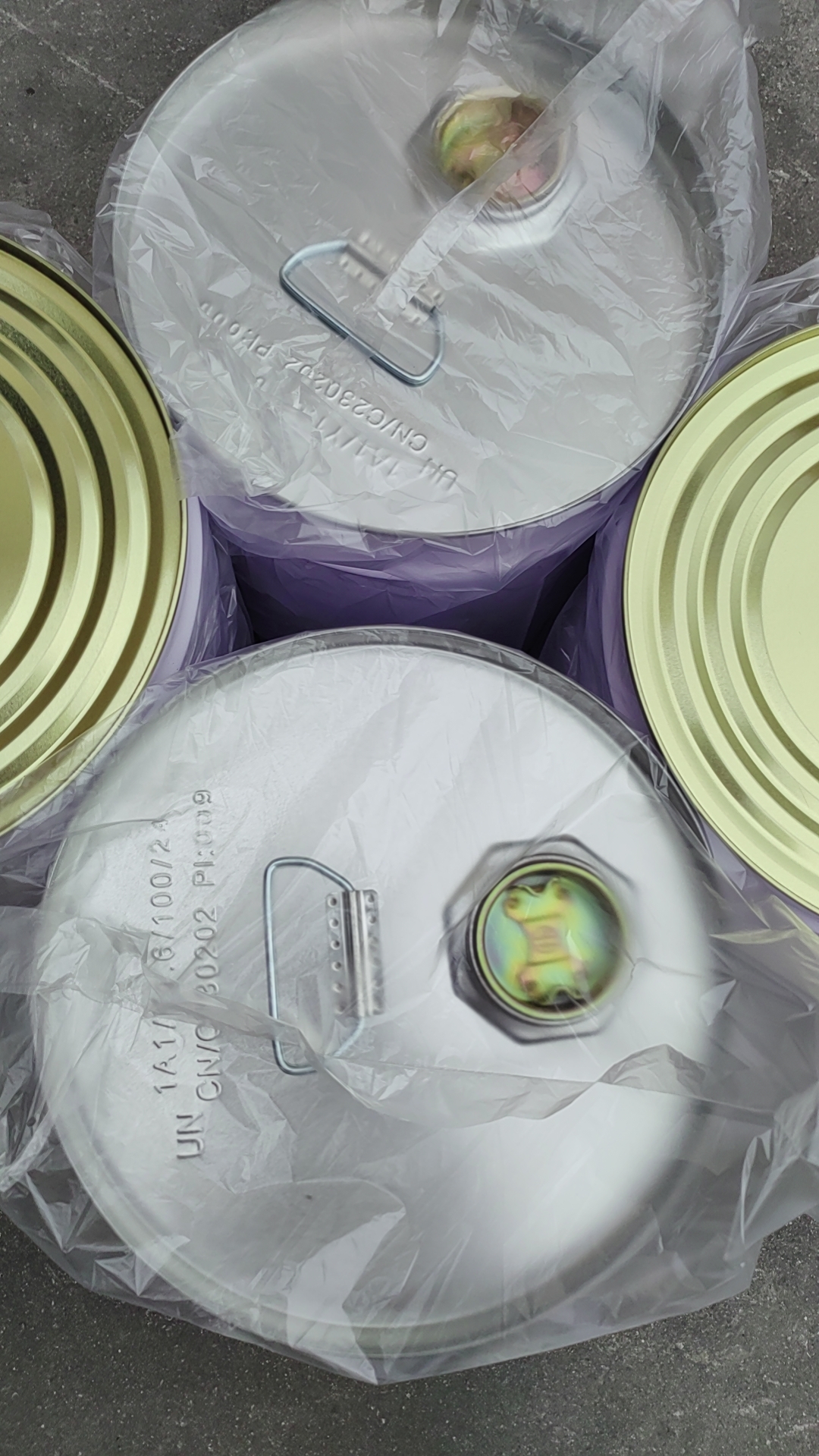
The United Nations created these standards to globally reduce shipping and storage accidents. They are globally adopted through systems like the IMDG Code (sea transport), ADR (European road transport), IATA DGR (air transport), and DOT regulations in the United States. If your product is hazardous, UN certification may be mandatory for export or transport[^5].
Typical Products Requiring UN Packaging
Common hazardous products needing certified packaging include solvents, paints, coatings, acids, alkalis, industrial chemicals, and lubricants.[^6] Below is a quick breakdown:
| Product Type | Typical Risk |
|---|---|
| Solvents | Flammable |
| Paints & Coatings | Flammable |
| Adhesives | Chemical reaction |
| Acids & Alkalis | Corrosive |
| Industrial Chemicals | Toxic or reactive |
| Lubricants | Combustible |
How Are UN Metal Buckets and Drums Tested?
A container may appear strong, but hazardous goods shipping imposes extreme stress on packaging. This is where UN certification plays a vital role.
UN certified metal containers undergo rigorous testing, including drop, pressure, leakproofness, and stacking tests.[^8] These simulate real-world conditions to ensure safety during transportation.
The testing process exceeds typical industrial packaging requirements, ensuring only validated designs receive approval. Here’s an overview of the main tests:
| Test Type | Purpose |
|---|---|
| Drop Test | Simulates impact during transport |
| Leakproofness Test | Detects seam or closure leakage |
| Hydrostatic Pressure Test | Measures pressure resistance |
| Stacking Test | Verifies warehouse stacking strength |
| Vibration Test | Simulates transport vibration |
Key UN Packaging Tests
-
Drop Test
Containers are dropped from specific heights onto hard surfaces.[^9] They must not rupture or leak. This test is vital for steel pails, paint cans, and open-head drums. -
Leakproofness Test
Air pressure is applied to ensure no leaks around seams, closures, or joints. It is one of the most critical tests for chemical packaging. -
Hydrostatic Pressure Test
This measures how containers handle internal pressure caused by volatile chemicals, temperature changes, or vapor expansion. -
Stacking Test
Containers are stacked under heavy loads to simulate warehouse storage conditions. Weak steel can deform or collapse under pressure.
How to Read UN Packaging Codes
Understanding UN codes on metal drums helps buyers verify compliance and choose the right packaging for their products.
UN codes specify container material, structure, performance level, and testing specifications.[^10] They provide quick compliance verification.
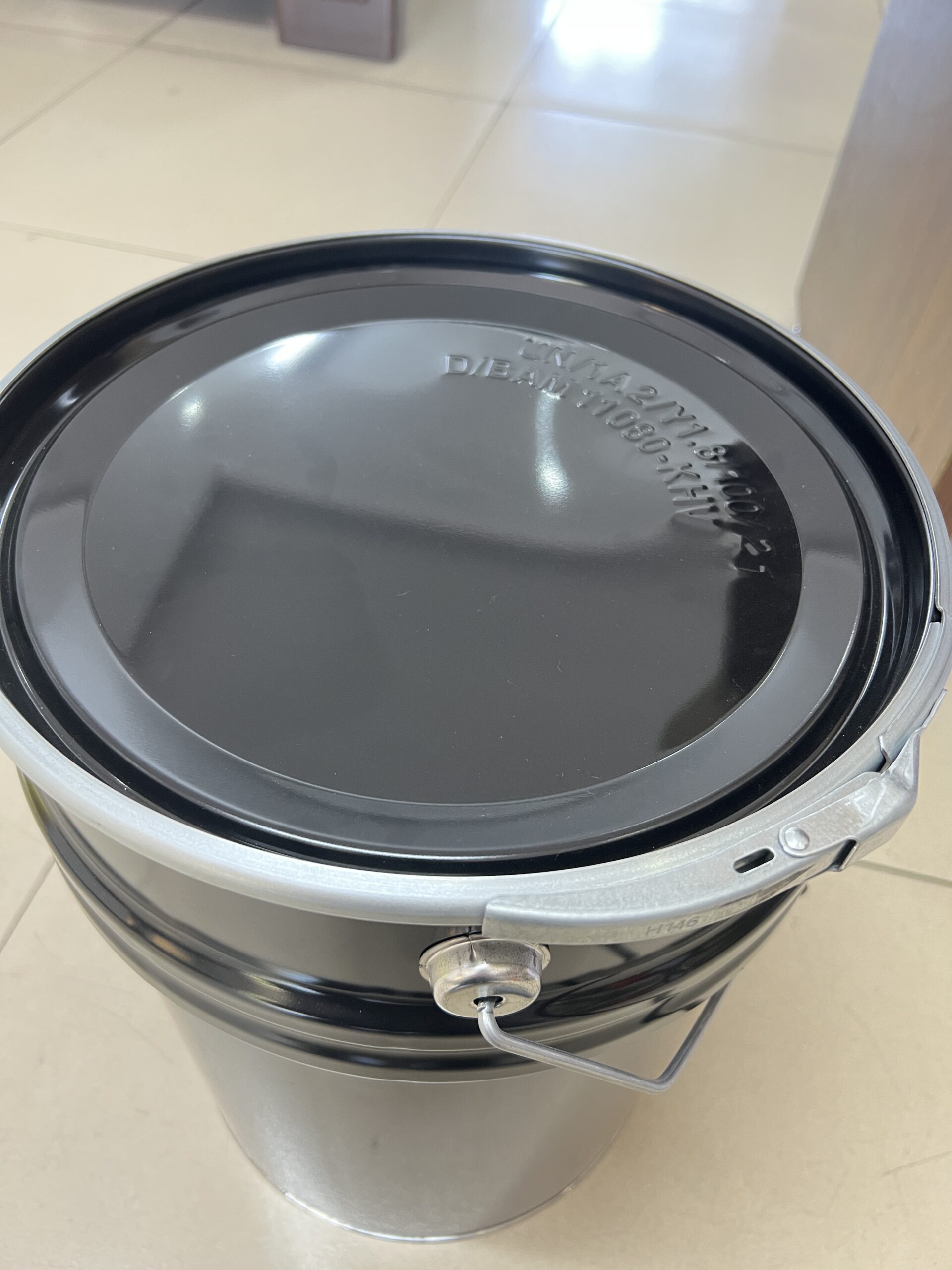
Here’s an example code: [1A2](https://www.govinfo.gov/content/pkg/CFR-2022-title49-vol3/pdf/CFR-2022-title49-vol3-sec178-504.pdf)[^11]/Y1.8/100
| Code Part | Meaning |
|---|---|
| 1A2 | Open-head steel drum |
| Y | Medium-danger packing group |
| 1.8 | Maximum specific gravity |
| 100 | Hydrostatic pressure test value |
Packaging Type & Packing Group Ratings
| Code | Packaging Type |
|---|---|
| 1A1 | Tight-head steel drum |
| 1A2 | Open-head steel drum |
| 3A1 | Steel jerrican |
| 1B1 | Aluminum drum |
| Rating | Hazard Level |
|---|---|
| X | High danger |
| Y | Medium danger |
| Z | Low danger |
Higher certifications involve stricter testing and durability standards.
Why Do UN Packaging Failures Still Happen?
Despite certification, real-world failures still occur due to poor manufacturing practices. Certification alone does not guarantee consistent quality.
Failures often result from weak seam protection, incompatible coatings, or low-grade steel. Proper manufacturing remains critical.
Common Causes of Failures
-
Weak Weld Seam Protection
Welding can burn away internal coatings, leading to corrosion and leaks. Proper seam protection is essential. -
Incorrect Internal Coatings
UN ratings do not ensure chemical compatibility. For example, ketone solvents can attack epoxy liners, while acids may corrode weak coatings. -
Low-Grade Steel
Thin steel may pass initial tests but fail under long-distance shipping, stacking, or temperature changes. High-quality materials provide better reliability.
UN Rated Buckets vs Standard Buckets
Standard buckets may look similar to UN rated ones, but critical differences lie in engineering and testing.
| Feature | UN Rated Packaging | Standard Packaging |
|---|---|---|
| Drop Testing | Mandatory | Usually not tested |
| Leakproofness Test | Required | Optional |
| Pressure Resistance | Certified | Unknown |
| Export Compliance | Internationally accepted | Risky |
| Hazardous Chemicals | Approved | Often prohibited |
For hazardous chemicals, standard packaging creates unnecessary risks.
How to Choose a Reliable UN Packaging Supplier
Choosing the right supplier ensures consistent quality and safety. Not all suppliers understand hazardous goods packaging.
A reliable supplier should perform leak testing, use quality materials, and provide full compliance documentation. Transparency is key.
Supplier Checklist
| Question | Why It Matters |
|---|---|
| Do you perform 100% leak testing? | Prevents defective containers |
| What seam protection system do you use? | Prevents corrosion |
| Which internal coatings are available? | Ensures chemical compatibility |
| Do you control production in-house? | Better quality consistency |
| Can you provide UN certificates? | Verifies compliance |
| Are you ISO certified? | Ensures quality management |
Professional suppliers can explain steel grades, seam structures, coatings, and testing standards.
Why UN Packaging Matters More Than Ever
As global regulations tighten, UN rated packaging has become essential for responsible chemical transportation.
Stricter standards, rising environmental risks, and customer expectations make compliance critical. UN rated packaging ensures safety, legality, and reliability.
Conclusion
UN rated packaging isn’t just a printed code—it represents engineering, safety, and compliance. For chemical exporters, investing in certified metal packaging prevents shipment failures, leaks, and legal risks. Choosing the right packaging and supplier ensures safer transportation for your hazardous products.
[^1]: "UN Recommendations on the Transport of Dangerous Goods", https://en.wikipedia.org/wiki/UN_Recommendations_on_the_Transport_of_Dangerous_Goods. The UN Model Regulations establish performance-oriented packaging requirements for dangerous goods and describe UN packaging markings used to indicate tested package designs. Evidence role: definition; source type: institution. Supports: UN rated packaging is certified packaging designed for the transport of hazardous materials.. Scope note: The source defines the regulatory framework rather than evaluating any specific package sold in the market. [^2]: "49 CFR Part 178 Subpart M -- Testing of Non-bulk Packagings and ...", https://www.ecfr.gov/current/title-49/subtitle-B/chapter-I/subchapter-C/part-178/subpart-M. The UN Model Regulations specify packaging performance tests, including drop, leakproofness, hydrostatic pressure, and stacking tests, for packages intended to carry dangerous goods. Evidence role: mechanism; source type: institution. Supports: UN rated packaging must pass tests related to impact, leakage, stacking, and internal pressure.. Scope note: Test applicability depends on package type, contents, and packing group classification. [^3]: "[PDF] Package Selection Marking and Labeling Requirements - PHMSA", https://www.phmsa.dot.gov/sites/phmsa.dot.gov/files/docs/Package_Selection_Marking_Labeling.pdf. UNECE explains that the UN Recommendations on the Transport of Dangerous Goods provide model regulations for the classification, packaging, marking, and transport of dangerous goods. Evidence role: definition; source type: institution. Supports: UN rated packaging is packaging tested and certified under United Nations dangerous goods regulations.. Scope note: Implementation occurs through modal and national regulations, so legal obligations vary by jurisdiction and transport mode. [^4]: "Dangerous Goods/Technical Instructions", https://www.icao.int/Dangerous-Goods/Technical-Instructions. International dangerous goods rules apply across transport modes through modal instruments such as ADR for road, RID for rail, the IMDG Code for sea, and the ICAO Technical Instructions/IATA DGR for air transport. Evidence role: historical_context; source type: institution. Supports: UN packaging rules are relevant to road, sea, rail, and air transportation of dangerous goods.. Scope note: The exact legal force of each instrument depends on the country, route, and carrier requirements. [^5]: "49 CFR Part 178 -- Specifications for Packagings - eCFR", https://www.ecfr.gov/current/title-49/subtitle-B/chapter-I/subchapter-C/part-178. U.S. hazardous materials regulations require authorized packagings for regulated hazardous materials, and international modal rules similarly require compliant packages for many dangerous goods shipments. Evidence role: general_support; source type: government. Supports: UN certification may be mandatory for exporting or transporting hazardous products.. Scope note: Whether UN specification packaging is mandatory depends on the substance classification, quantity, exemptions, and transport mode. [^6]: "Nine Classes of Hazardous Materials (Yellow Visor Card)", https://www.fmcsa.dot.gov/regulations/enforcement/nine-classes-hazardous-materials-yellow-visor-card. Dangerous goods lists and classification guidance identify flammable liquids, corrosive substances, toxic substances, and environmentally hazardous substances among regulated classes, categories that can include solvents, paints, acids, alkalis, and industrial chemical products. Evidence role: general_support; source type: institution. Supports: Products such as solvents, paints, acids, alkalis, and industrial chemicals commonly require certified dangerous goods packaging when they meet hazardous classification criteria.. Scope note: The classification of a specific product depends on its formulation, concentration, flash point, pH, toxicity, and other test data. [^7]: "PHMSA Enforcement - Department of Transportation", https://www.phmsa.dot.gov/regulatory-compliance/phmsa-enforcement. Transport agencies note that non-compliant hazardous materials packaging can result in enforcement action, rejected transport, and safety incidents involving releases or leaks. Evidence role: general_support; source type: government. Supports: Failure to use appropriate certified packaging can cause shipment refusal, regulatory consequences, or leakage risks.. Scope note: Customs delays and insurance consequences are situational and may depend on carrier policies, contract terms, and local enforcement practices. [^8]: "49 CFR Part 178 Subpart M -- Testing of Non-bulk Packagings and ...", https://www.ecfr.gov/current/title-49/subtitle-B/chapter-I/subchapter-C/part-178/subpart-M. UN dangerous goods packaging provisions describe performance tests for drums and similar packagings, including drop testing, leakproofness testing, hydrostatic pressure testing for liquids, and stacking tests. Evidence role: mechanism; source type: institution. Supports: UN certified metal containers are subject to drop, pressure, leakproofness, and stacking tests.. Scope note: Specific test conditions vary by packaging material, closure type, liquid or solid contents, and packing group. [^9]: "49 CFR § 178.603 - Drop test. - Cornell Law School", https://www.law.cornell.edu/cfr/text/49/178.603. UN packaging test procedures specify drop tests from prescribed heights onto a rigid, non-resilient surface to assess whether dangerous goods packages remain intact under impact conditions. Evidence role: mechanism; source type: institution. Supports: UN packaging drop tests require containers to be dropped from specified heights onto hard surfaces.. Scope note: The prescribed height depends on the packing group, package design, and test substance or substitute material used. [^10]: "49 CFR 178.503 -- Marking of packagings. - eCFR", https://www.ecfr.gov/current/title-49/subtitle-B/chapter-I/subchapter-C/part-178/subpart-L/section-178.503. UN packaging marks encode the packaging type and material, packing group performance level, relative density or gross mass, hydrostatic pressure where applicable, year of manufacture, and approving state or authority. Evidence role: definition; source type: institution. Supports: UN packaging codes communicate material, structure, performance level, and test-related specifications.. Scope note: The exact elements shown in a mark differ for solids, liquids, combination packagings, and different packaging forms. [^11]: "[PDF] 49 CFR Ch. I (10–1–22 Edition) § 178.504 - GovInfo", https://www.govinfo.gov/content/pkg/CFR-2022-title49-vol3/pdf/CFR-2022-title49-vol3-sec178-504.pdf. Dangerous goods packaging codes identify “1A2” as a steel drum with a removable head, commonly referred to as an open-head steel drum. Evidence role: definition; source type: government. Supports: The packaging code 1A2 means an open-head or removable-head steel drum.. Scope note: Terminology such as “open-head” may vary by industry usage, while the regulatory term is generally “removable head.”
<!--[googlesitekit-end-of-content]-->