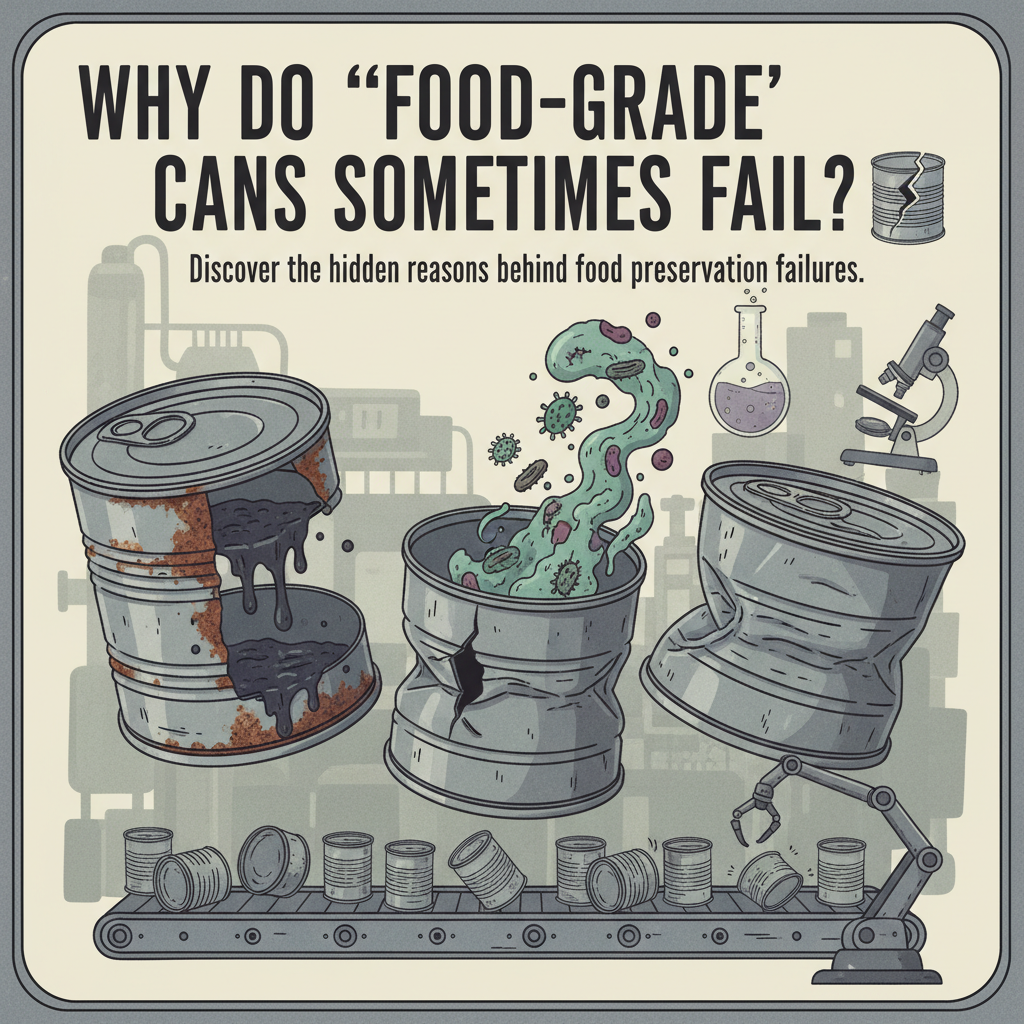
You trust the "food-grade1" label on your packaging. But what if that isn't enough, and your product's quality is at risk? The solution lies in choosing a specific inner coating2.
The term "food-grade" is a baseline, not a guarantee. Cans can fail because a generic coating is incompatible with a specific food's chemistry, like its acidity or sulfur content. True safety comes from matching the food's properties with the correct specialized internal coating, like epoxy3, polyester%%%FOOTNOTE_REF4%%% or [C-enamel](https://www.berlinpackaging.com/anatomy-of-a-can/?srsltid=AfmBOopReRbo1YJ6aEJT7fyjgDzX8aUAg04YF9z1LApSPB888sWYB9b)5 .
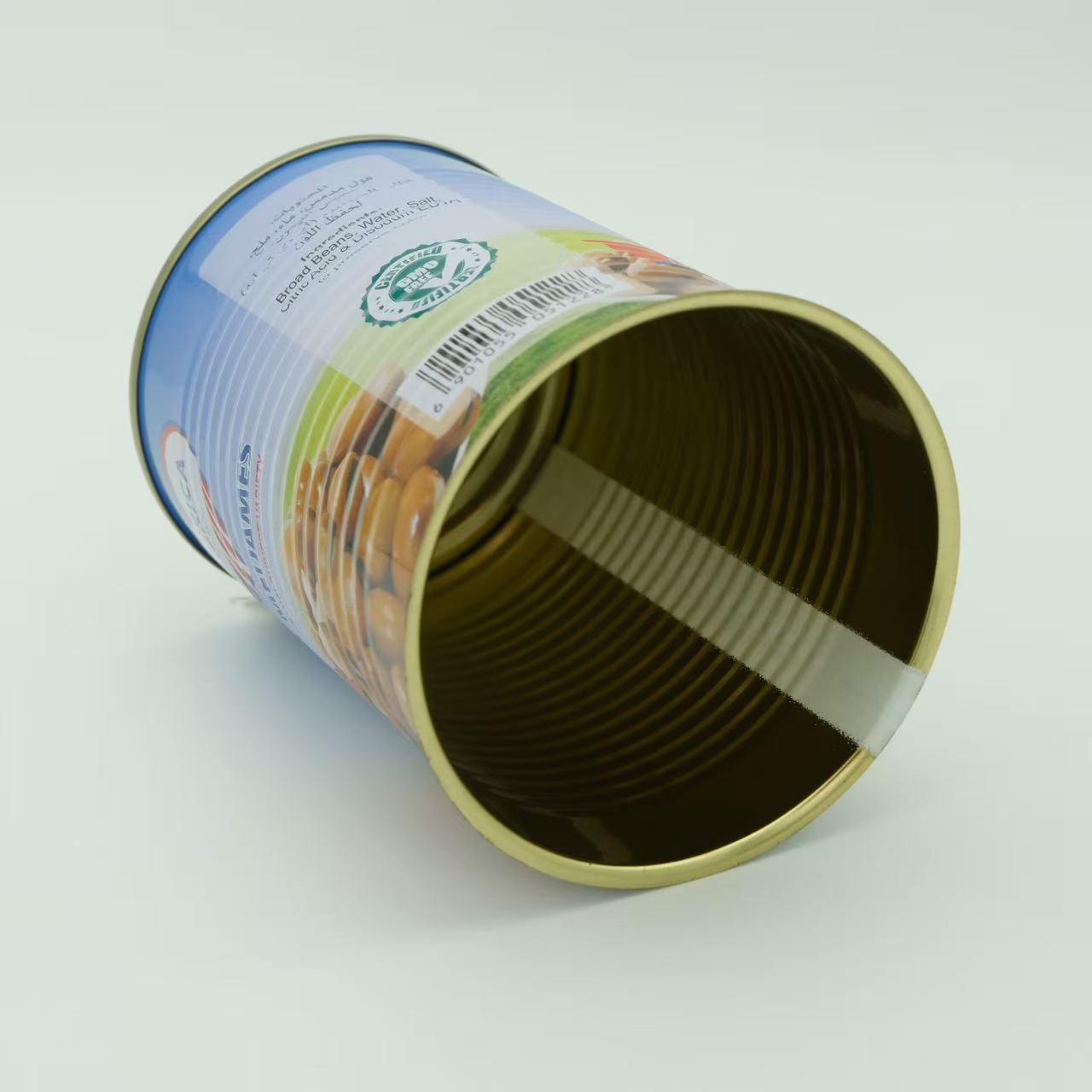
I've been in the metal packaging business for nearly two decades, and I've seen this issue time and again. A client comes to us after their beautiful product was ruined by the wrong can. It's a frustrating and costly mistake. But the good news is, it's entirely preventable. Understanding the technology behind these inner linings is the key to protecting your product, your customers, and your brand. Let's break down how these coatings work so you can make the right choice every single time.
What Are the Main Types of Can Coatings?
You think you're just choosing a can. But the unseen inner coating—epoxy, polyester, phenolic—is what truly protects your product's shelf life6, taste, and appearance. Understanding these core types is key.
The main types are epoxy-based (a versatile workhorse), phenolic (for high-acid foods), polyester (for flavor-sensitive items), and vinyl (for flexible cans). Specialty coatings also exist, like C-enamel for sulfur-rich foods, to prevent discoloration and maintain quality. Each serves a specific protective purpose.
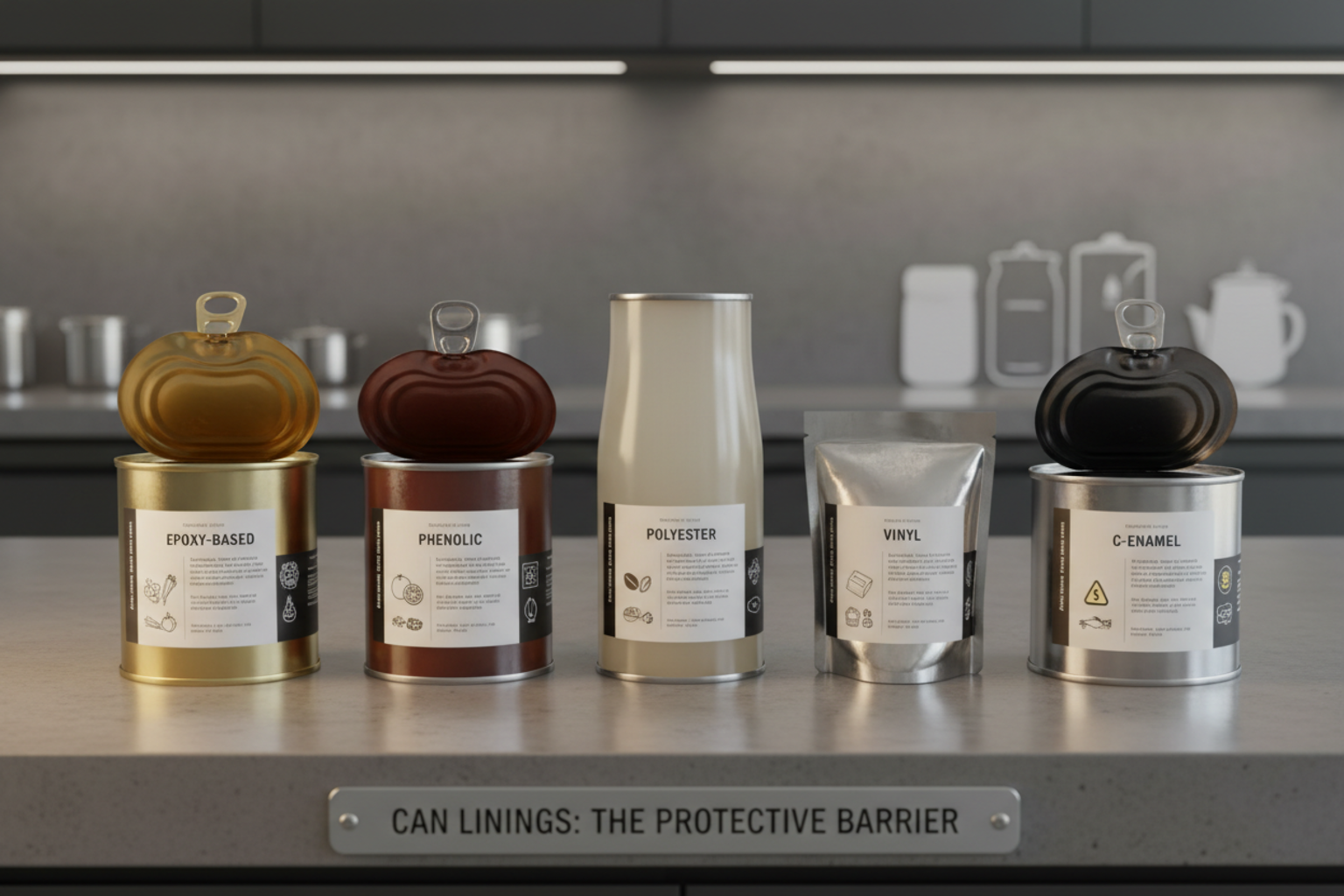
Let's dive deeper into what these coatings are. Think of them as the silent heroes of food preservation. They are ultra-thin organic polymer films applied to the inside of the can, creating a crucial barrier between the metal and the food.
Key Coating Families
| Coating Type | Primary Function & Characteristics |
|---|---|
| Epoxy Resin | The traditional industry champion. It offers excellent adhesion and general corrosion resistance7. Historically, many used BPA, but the industry is now dominated by "BPA-NI8" (BPA-Non-Intent) versions that use alternative, safer monomers. |
| Phenolic Resin | Known for its hardness and incredible resistance to chemicals, especially acids. It's often used as a top layer over epoxy for highly acidic products like tomato sauce or pickles. |
| Polyester | This is the go-to for flavor-sensitive products. It has great flexibility and is excellent at preventing any "canned" taste from developing. You'll find it in cans for beer, coffee, and baby food. |
| Vinyl Organosol | This coating can be applied in a thicker layer, providing a robust physical barrier. It's perfect for cans that undergo a lot of stress during manufacturing, like deep-drawn fish or luncheon meat cans. |
| Specialty Coatings | These are designed for specific problems. C-enamel, for example, contains zinc oxide to "catch" sulfur released from foods like corn and meat, preventing black spots from forming. |
As a manufacturer, we work with these materials every day. It's not about which one is "best," but which one is right for the job.
How Do You Match the Coating to Your Specific Food Product?
You've perfected your recipe, from a rich tomato sauce to sweet, delicate peaches. But putting it in the wrong can could cause discoloration, off-flavors, or even corrosion. It's a nightmare.
Match coatings by food properties9. Use high-acid resistant coatings (like a phenolic topcoat) for tomatoes. Choose C-enamel for sulfur-rich foods like corn and meat to prevent blackening. For delicate flavors in coffee or baby food, use an inert polyester coating. The food's chemistry dictates the best barrier.
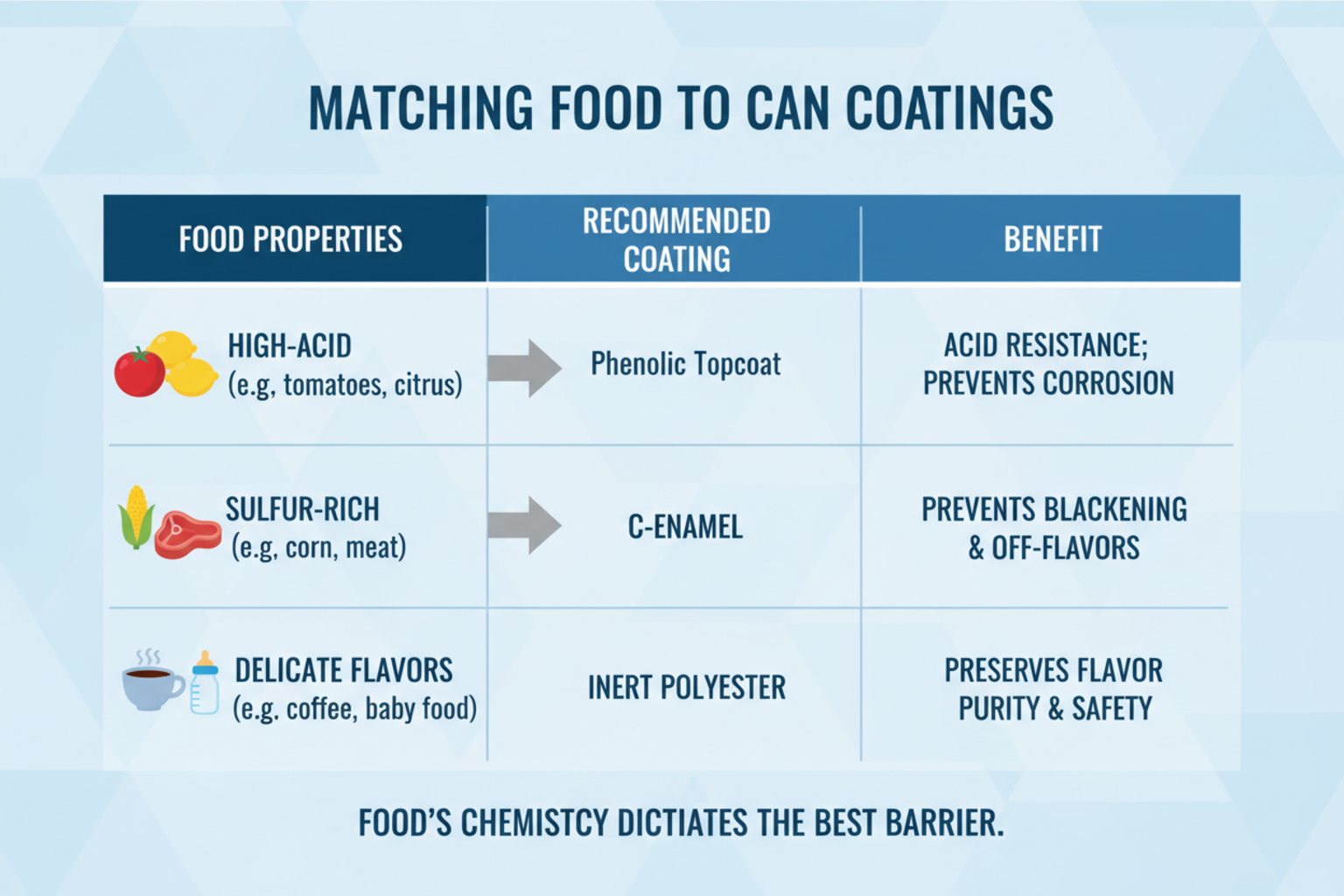
I remember a client who came to us with a major problem. Their premium corn chowder was developing unsightly black specks inside the can. They were using a standard "food-grade" can, but it wasn't enough. The sulfur from the corn was reacting with the metal. We switched them to a can with a C-enamel lining, which is specifically designed to absorb sulfur compounds. The problem vanished overnight. Their product looked perfect, and their customer complaints stopped. This is a perfect example of why a one-size-fits-all approach doesn't work. You have to get specific.
Here’s a simple guide we use to help our clients:
| Food Category | Challenge | Recommended Coating Solution |
|---|---|---|
| High-Acid Foods (Tomatoes, juices, pickles) | Strong acids corrode metal, causing leaks and a metallic taste. | A robust system, often a dual layer of an epoxy base and a high-acid resistant phenolic topcoat. |
| Sulfur-Rich Foods (Meat, corn, fish, poultry) | Heat sterilization releases sulfur, which creates black sulfide stains. | C-enamel is the standard. It contains zinc compounds that react with sulfur to form a harmless white substance instead. |
| Light-Colored Fruits (Peaches, pears, lychees) | Prone to browning from oxidation. | A special fruit lacquer or a thin polyester/epoxy coating is used. This works with the tinplate to help preserve the fruit's natural color. |
| Flavor-Sensitive Foods (Beer, coffee, baby food) | Easily absorbs off-tastes from the packaging. | High-purity polyester or a high-performance BPA-NI coating. The goal is zero flavor transfer. |
| High-Deformation Cans (Luncheon meat, fish) | The can is stretched and shaped, which can crack a brittle coating. | A highly flexible epoxy or a thick vinyl organosol coating that can stretch without breaking. |
| General-Purpose Foods (Most vegetables, soups) | Moderate corrosiveness, needs solid all-around protection. | A standard epoxy resin coating is often the most economical and effective choice for these products. |
What Are the Future Trends in Food Can Linings?
You've found a solution that works for you right now. But regulations and consumer demands are always changing, especially around materials like BPA. Are you prepared for what's next?
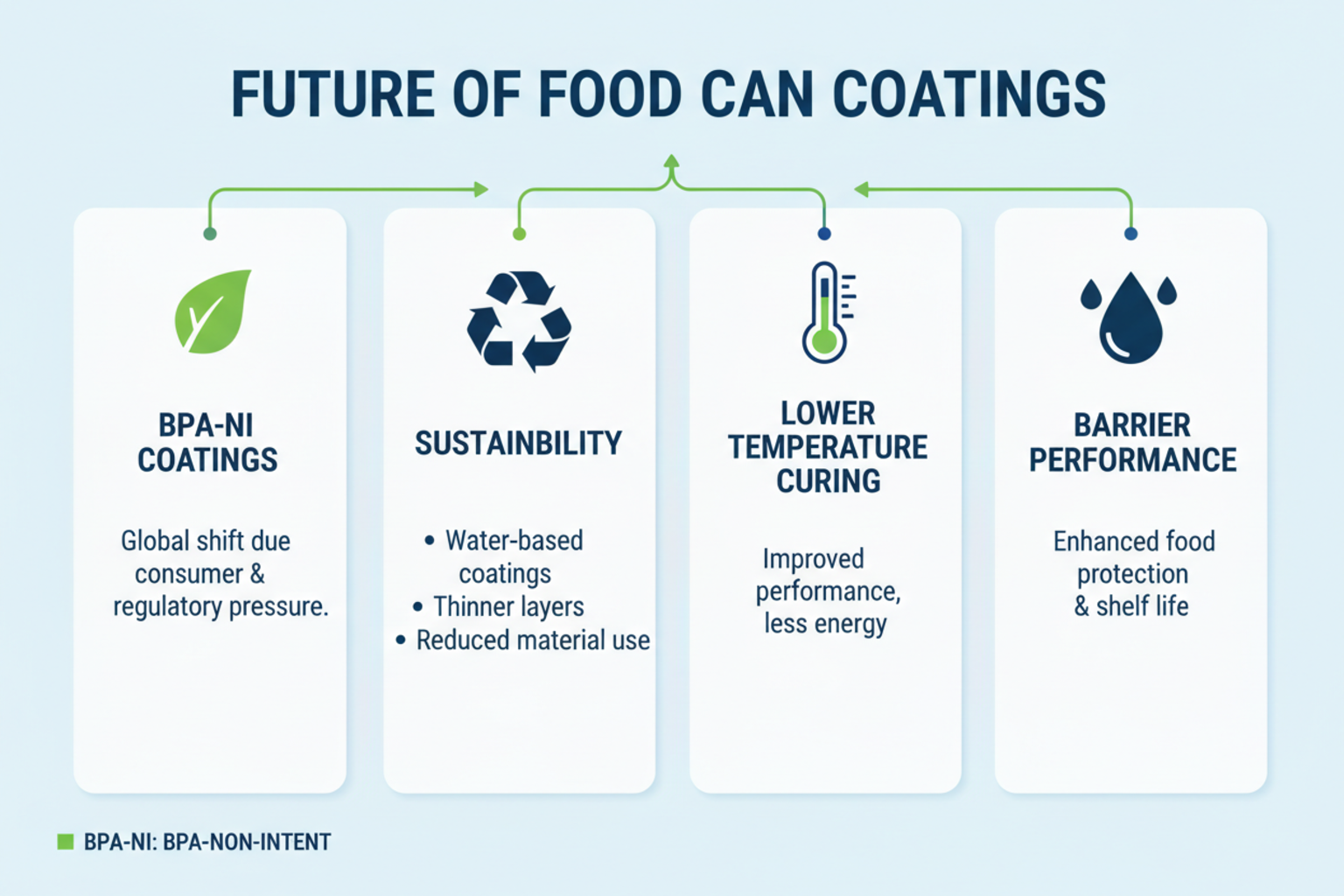
The biggest trend is the global shift to BPA-NI (BPA-Non-Intent) coatings due to consumer and regulatory pressure. Other key trends include sustainability10 through water-based coatings11 and thinner layers12, and improved performance with coatings that cure at lower temperatures to reduce energy use.
We are constantly talking with our material suppliers, like PPG and AkzoNobel, to stay ahead of these changes. It's our job to make sure the packaging we produce for you is not only safe today but also compliant and desirable for years to come. The conversation has moved beyond just performance; it's now about safety, perception, and environmental responsibility.
Here’s what you need to keep on your radar:
1. The End of BPA
The move away from Bisphenol A (BPA) is no longer a niche trend; it's a global standard. Consumers demand it, and regulations in many regions mandate it. We are now working almost exclusively with BPA-NI solutions. These include next-generation epoxies made without BPA monomers, as well as materials like polyesters and acrylics. If you aren't already using BPA-NI cans, you need to start planning the transition now.
2. Sustainability and Eco-Friendliness
The focus on sustainability is hitting every part of manufacturing. In our world, that means two things:
- Water-Based Coatings: We are seeing a gradual shift from solvent-based coatings to water-based ones. This dramatically reduces Volatile Organic Compound (VOC) emissions during manufacturing, which is better for the environment.
- Thinner, Stronger Coatings: New technology allows us to apply thinner layers of coating without sacrificing protection. This reduces material usage and energy consumption13.
3. Better Performance, Less Energy
The final piece of the puzzle is efficiency. New coatings are being developed that cure (harden) at lower temperatures. This might sound like a small technical detail, but it has a huge impact. Lowering the temperature of our curing ovens reduces our factory's carbon footprint, a benefit that we can pass on to our environmentally conscious clients.
Conclusion
Choosing the right can lining isn't about a generic "food-grade" stamp. It’s about matching the food to the coating, testing for compatibility, and preparing for the future of packaging.
Understanding the food-grade label is crucial for ensuring product safety and quality in packaging. ↩
Explore how inner coatings protect food quality and prevent contamination. ↩
Learn why epoxy is a popular choice for food can linings and its protective properties. ↩
Discover how polyester coatings preserve the taste of sensitive food items. ↩
Learn about C-enamel's unique properties for sulfur-rich foods and its benefits. ↩
Understand the role of coatings in extending the shelf life of food products. ↩
Understand the importance of corrosion resistance in maintaining food quality. ↩
Explore the significance of BPA-NI coatings in modern food packaging. ↩
Learn how the chemistry of food determines the best can lining. ↩
Stay informed about the latest sustainable practices in food packaging. ↩
Learn how water-based coatings contribute to environmental sustainability. ↩
Discover the benefits of using thinner coatings for efficiency and protection. ↩
Explore innovative methods to lower energy use in food packaging processes. ↩