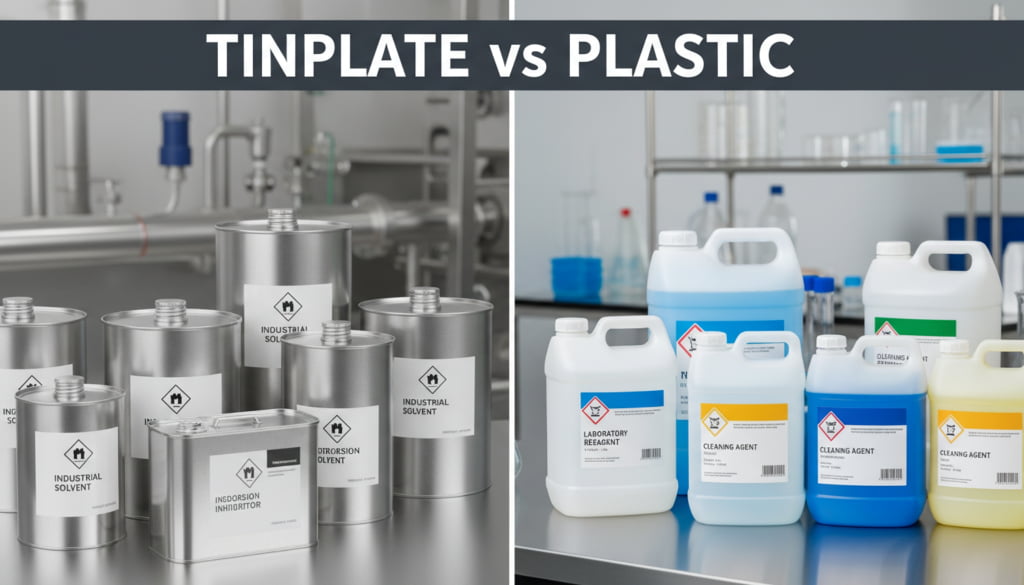
Worried about chemical leaks1 or product damage? Choosing the wrong packaging can lead to costly accidents and recalls. We offer a solution for safe, reliable storage and transport.
Tinplate packaging2 offers superior safety for medium- to high-risk chemicals due to its strong barrier, structural integrity, and chemical resistance3. Plastic is a cost-effective option for low-risk products with short storage times.
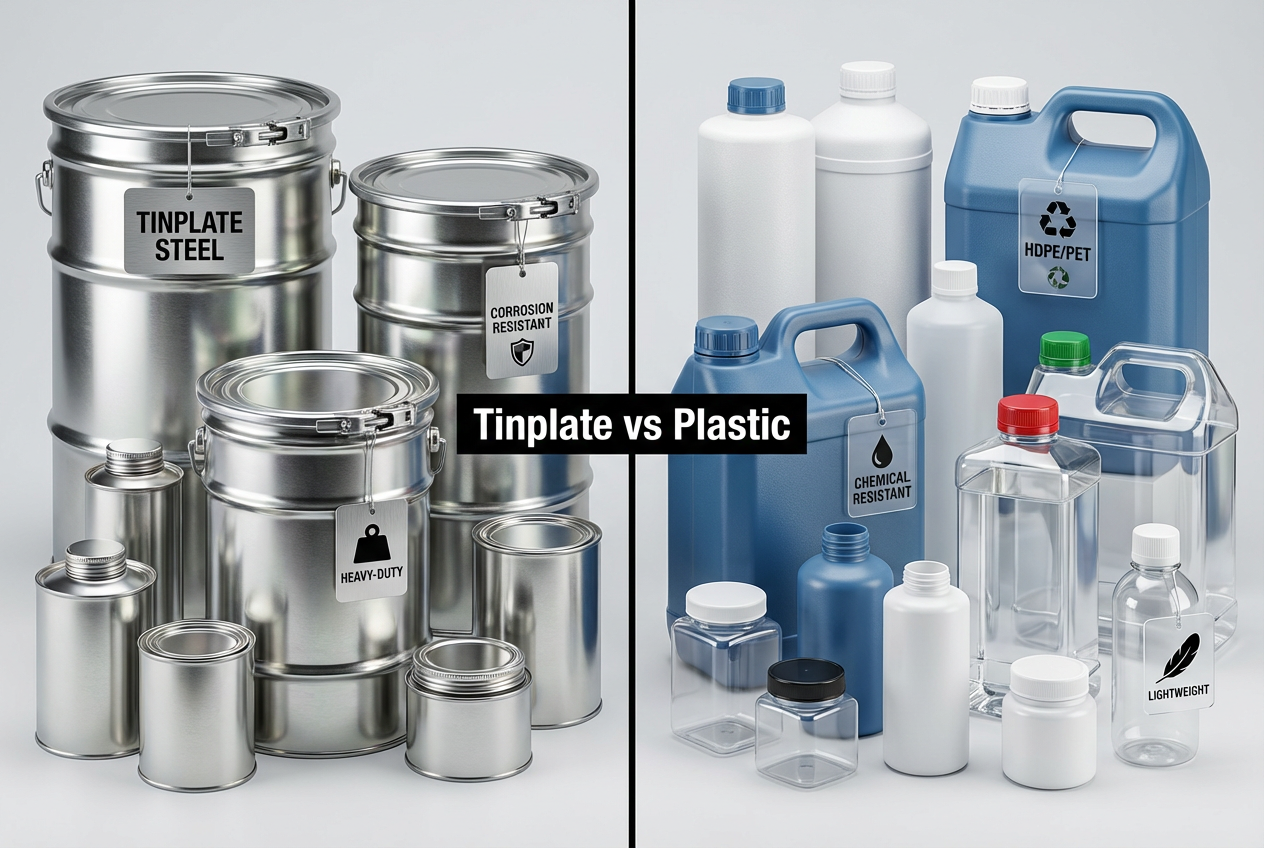
This choice is more than just picking a container; it's about protecting your product, your customers, and your brand. As a manufacturer since 2006, we've seen firsthand how the right packaging can make or break a business. Let's break down why this decision is so critical and help you choose with confidence.
Why is choosing the right chemical packaging so important?
Storing valuable chemicals is stressful. A packaging failure means lost product, safety hazards, and a damaged reputation. We understand the need for complete security and peace of mind.
Choosing the right packaging is critical because it directly impacts product safety, stability, and transportation compliance. A poor choice can lead to leaks, contamination, safety incidents, and expensive recalls, putting your business at risk.
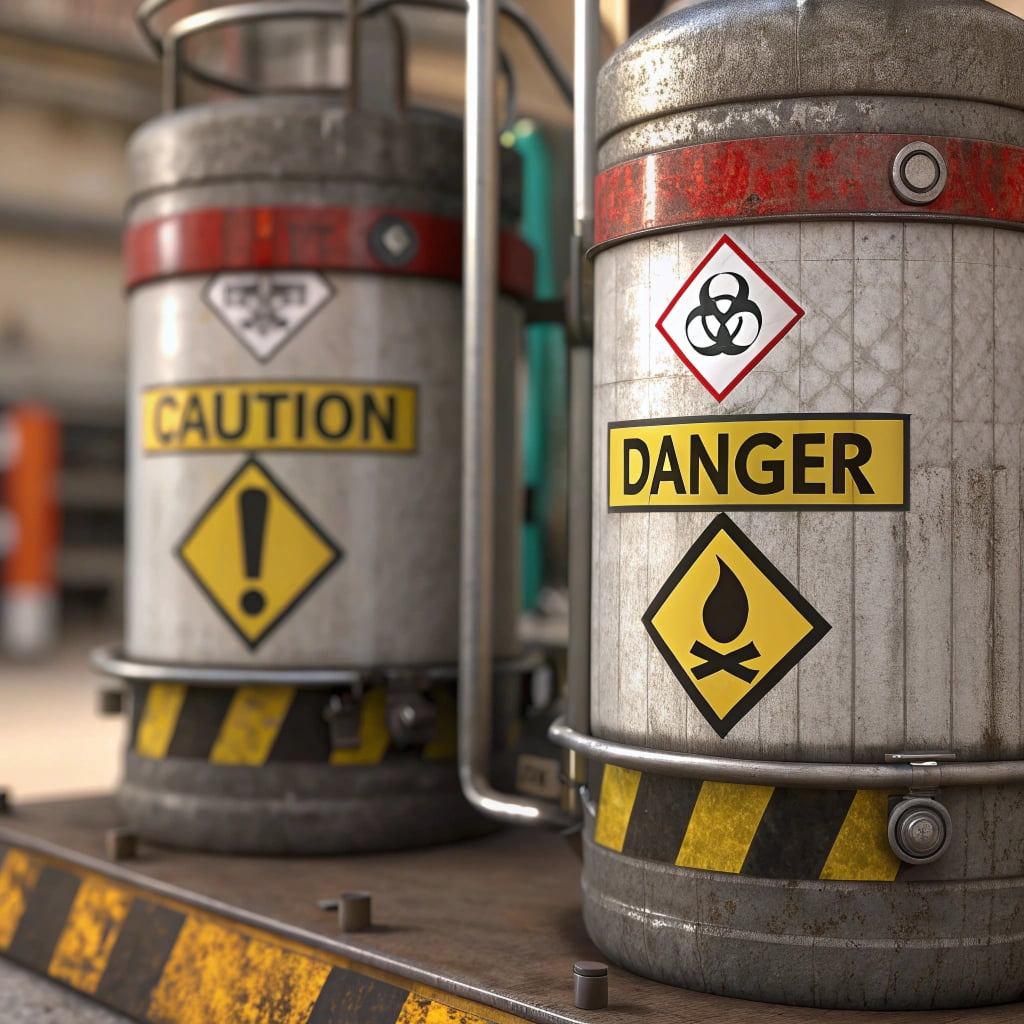
I remember a client who came to us after a pallet of their coating product, packaged in plastic jugs, was rejected at a port. The jugs had deformed under the summer heat, causing some to leak. The financial loss and the damage to their relationship with the distributor were huge. This is not just a theoretical risk; it happens all the time. Your packaging is the first line of defense for your product.
The Real Costs of a Packaging Failure
When we talk about packaging, we're really talking about risk management.
- Product Value: Many chemical products, like specialized adhesives or lab reagents, are very expensive. A leak isn't just a mess; it's a direct loss of profit.
- Safety and Environment: Hazardous materials leaking during transport or in a warehouse can cause serious safety incidents or environmental damage. The liability can be enormous.
- Brand Reputation4: A customer receiving a dented, leaking, or compromised container immediately loses trust in your brand. First impressions are everything.
That's why we take our job so seriously. We're not just making cans; we're providing a critical component that ensures your product gets from your facility to your customer safely and in perfect condition.
What makes tinplate packaging a top choice for chemicals?
Does your packaging look cheap or fail to protect your premium product? Poor branding and weak containers can hurt sales. We offer packaging that reflects your product's quality.
Tinplate is steel coated with a thin layer of tin, often with an internal protective layer. It's used for chemicals because of its high-quality printing, full barrier protection, and excellent strength for stacking and transport.
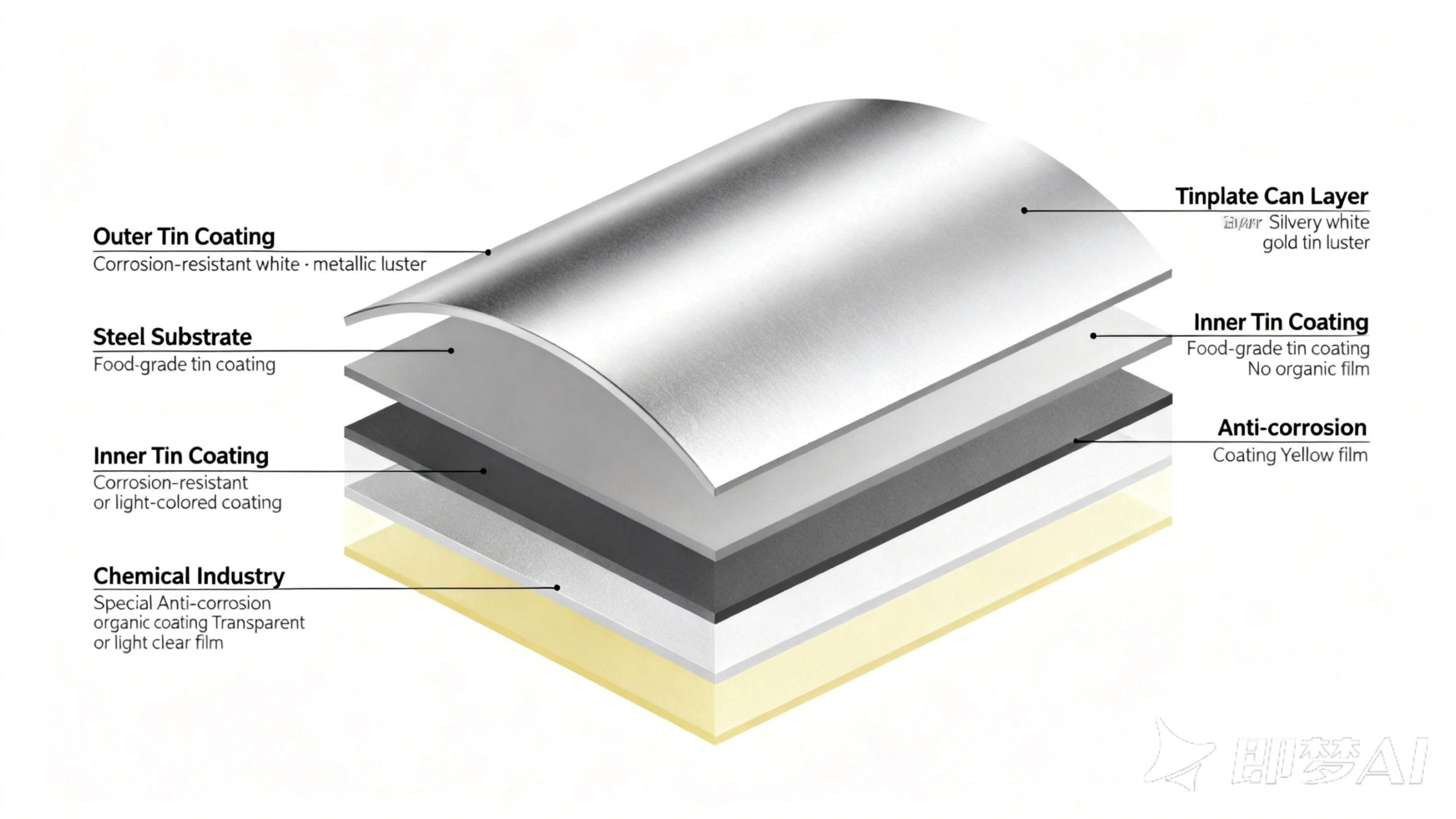
When people think of metal cans, they might just think of durability. But it's so much more than that. Tinplate is a highly engineered material designed for performance. We work with it every day in our factory, from slitting the raw coils to stamping the final lids, and its properties are perfect for the chemical industry.
More Than Just a Can
The benefits go beyond just being strong.
- Premium Look and Feel: You can print high-resolution, full-color graphics directly onto tinplate. This makes your brand stand out on the shelf. A plastic jug with a peeling label just can't compete with the professional appearance of a printed metal can.
- Total Barrier Protection: Tinplate is a 100% barrier to light, oxygen, and moisture. This is not an exaggeration. Nothing gets in, and nothing gets out. For light-sensitive or air-sensitive chemicals, this is a non-negotiable feature that plastic cannot offer.
- Sustainability5: Steel is one of the most recycled materials on earth. Our tinplate cans are 100% recyclable, which is a huge selling point for environmentally conscious companies and their customers.
How do tinplate and plastic really stack up for chemical use?
Feeling confused by the options? It's hard to compare materials when a mistake could be dangerous. We can simplify the choice by looking at the key differences.
Tinplate and plastic differ greatly in performance. Tinplate offers a 100% barrier, high structural strength, and better chemical compatibility. Plastic is more permeable, less durable, and has a higher risk of deforming or leaking.
Let's look at a direct comparison. I often walk customers through this table to make the right decision for their specific product. It’s not about one being "bad" and one being "good"; it’s about matching the packaging to the product's needs. For most of the chemical companies we work with, the choice becomes very clear once they see the data.
Detailed Comparison: Tinplate vs. Plastic
| Comparison Factor | Tinplate Packaging | Plastic Packaging |
|---|---|---|
| Barrier Protection | Complete 100% barrier to light, oxygen, and moisture. This preserves product integrity and shelf life. | Semi-permeable. It allows for slow transmission of gases and moisture, which can degrade sensitive products over time. |
| Structural Strength | High resistance to pressure, puncture, and stacking. Ideal for heavy-duty transport and warehouse storage. | Limited strength. Prone to deforming under pressure or heat, and can be punctured more easily. Stacking height is limited. |
| Leakage Risk | Very low risk with proper seaming and quality testing. Metal seams are incredibly secure. | Higher risk of leakage due to deformation, cap failure, or stress cracking, especially with temperature changes. |
| Chemical Compatibility | Excellent and stable when paired with the correct internal epoxy or phenolic coatings. No risk of leaching. | Risk of additive migration. Plasticizers and stabilizers in the plastic can leach into the chemical product over time. |
| Printing & Branding | High-resolution, premium printing directly on the metal surface for a professional, high-end look. | Limited to labels or lower-quality direct printing. Does not convey the same premium feel. |
| Recyclability6 | Fully and infinitely recyclable steel. A strong environmental advantage. | Recycling rates and processes vary widely by plastic type. Often less efficient than metal recycling. |
| Export Suitability | Preferred and often required for dangerous goods transport due to its strength and safety. | Often restricted for international shipping of hazardous materials. May require extra protective packaging. |
Why does barrier protection matter so much for chemical packaging?
Is your product losing effectiveness over time? Exposure to light, air, or moisture can ruin sensitive chemicals. We provide packaging that guarantees product integrity from factory to use.
Barrier performance is vital because many chemicals degrade when exposed to light, oxygen, or moisture. Tinplate provides a complete, 100% barrier, protecting product potency and shelf life, which plastic packaging cannot guarantee.
We once helped a manufacturer of a two-part epoxy. The curing agent was packaged in plastic bottles, and they were getting complaints that it wasn't working correctly. After some investigation, we realized that moisture from the air was slowly getting through the plastic and reacting with the chemical, reducing its potency. They switched to our small, coated tinplate cans, and the problem disappeared completely.
The Enemies of Chemical Stability
Think of our tinplate can as a fortress for your product. It protects against three main enemies:
- Light (UV Radiation): Sunlight can break down the chemical bonds in many organic solvents and formulations, changing their properties or making them useless. Tinplate is completely opaque, offering 100% light-blocking protection.
- Oxygen: Oxygen in the air can cause oxidation, which can ruin products like certain coatings, resins, or lab chemicals. An airtight tinplate can prevents any oxygen from getting in.
- Water Vapor: Moisture is another enemy. It can trigger unwanted reactions or dilute products. Tinplate's hermetic seal ensures a completely dry internal environment.
Plastic, being a polymer, is never a true, absolute barrier. For short-term, non-sensitive products, it might be fine. But for anything that needs to be protected for months or years, metal is the only way to be sure.
How does a strong package keep chemicals safe during shipping?
Worried about containers getting crushed or punctured during shipping? Damaged goods are a huge headache. We build our containers to withstand the roughest journeys, so your product arrives safely.
Strong packaging directly reduces the risk of leaks and accidents. Tinplate cans resist pressure, punctures, and stacking weight, making them ideal for rough handling during transport. This is why they are preferred for shipping hazardous materials.
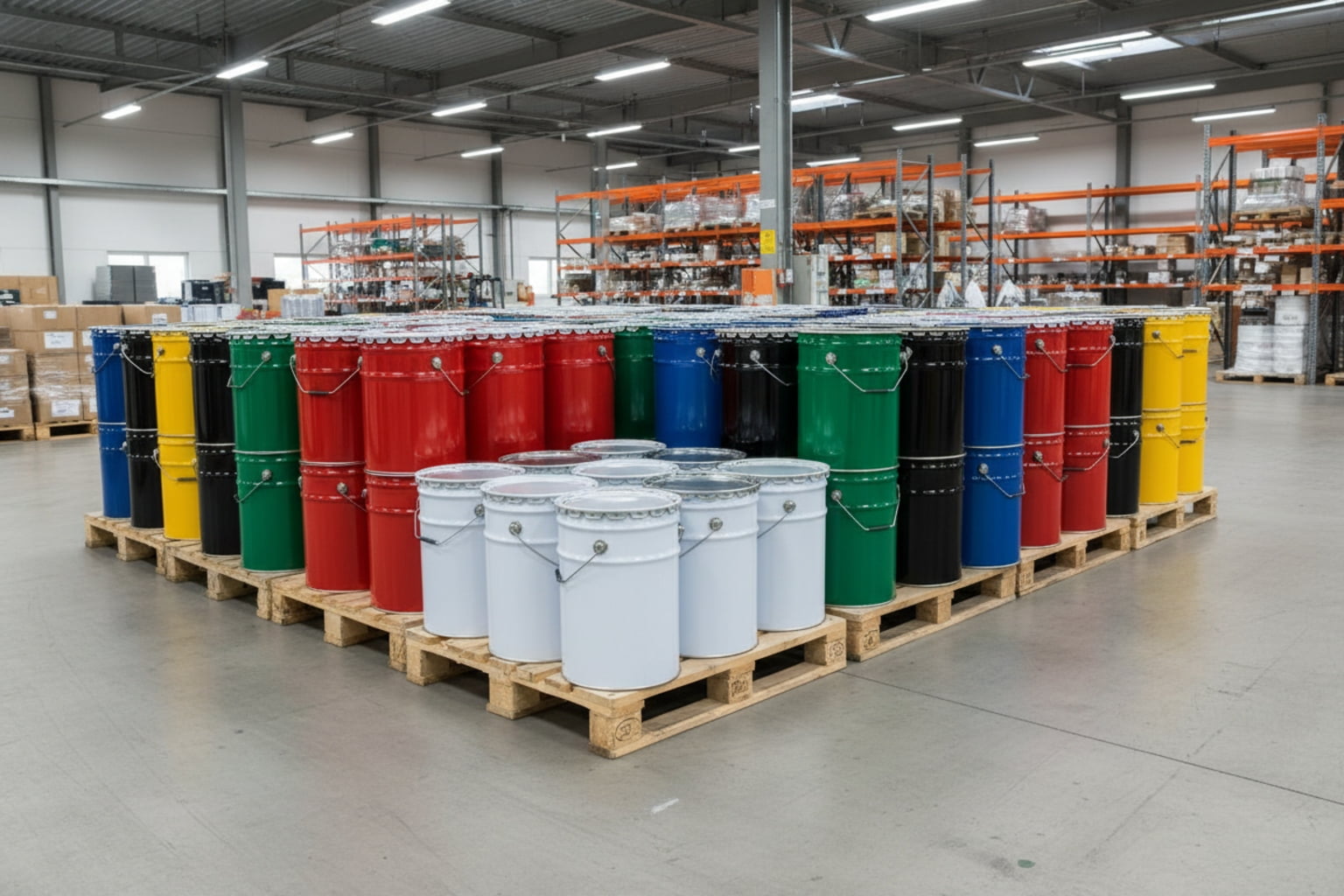
When you ship a product, you lose control over how it's handled. It gets loaded onto trucks, stacked in warehouses, and moved around with forklifts. We design our cans knowing they will face a tough environment. The structural strength of steel provides a level of security that plastic just can't match.
Surviving the Supply Chain
A package's journey is rough, and its strength is tested at every step.
- Puncture Resistance: A sharp corner of another pallet or a piece of equipment can easily puncture a plastic jug. Steel is far more resistant to this kind of damage, preventing costly spills.
- Pressure Changes: During transport, especially air freight or travel through different altitudes, pressure changes can cause flexible containers to swell or collapse. The rigid structure of a tinplate can handles these changes without a problem.
- Stacking Strength: Warehouse space is expensive, so products are stacked high on pallets. Our tinplate cans are designed to bear significant weight without crushing or deforming. This means you can stack pallets safely and efficiently, maximizing your storage space.
This is why international regulations for dangerous goods often specify metal containers. When safety is paramount, you need the proven strength of steel.
Are tinplate and plastic equally safe for all chemicals?
Can you be sure your container isn't contaminating your product? Some plastics can leach chemicals over time. We use special internal coatings to ensure your product stays pure.
No, they are not equally safe. Tinplate cans use inert internal coatings like epoxy or phenolic resins to prevent reactions and ensure product purity. Plastic containers can have additives that might migrate into the chemical product.
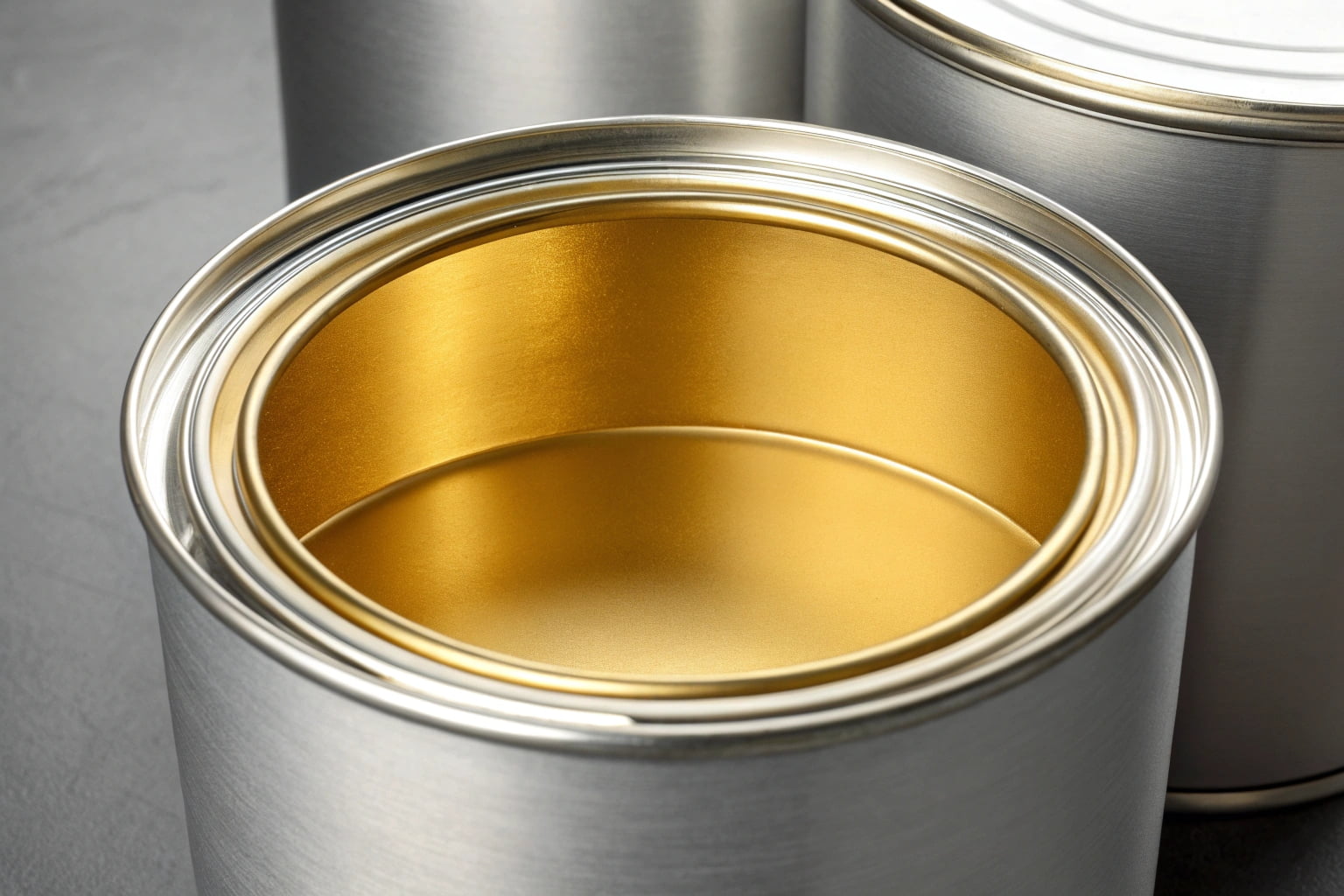
This is one of the most important, but least understood, aspects of chemical packaging. The container itself should not interact with the product inside it. A lot of our research and development goes into selecting and testing the right internal coatings for different types of chemicals.
The Purity Promise: Inside the Can
The inside of our cans is just as important as the outside.
- Inert Coatings: We use coatings like epoxy phenolic, which are baked onto the tinplate. These coatings form a hard, non-reactive barrier between the metal and your product. We help you choose the right coating based on the chemical's pH, solvent type, and other properties.
- No Additive Migration: Plastic containers are made with additives like plasticizers (for flexibility) and stabilizers (for durability). Under certain conditions, especially with aggressive solvents or long storage times, these small molecules can "migrate" or leach out of the plastic and into your chemical product. This contaminates your product and can alter its performance.
- Weld Seam Protection: For our three-piece cans, we even apply a special powder coating over the internal weld seam. This ensures that every single square millimeter of the interior surface is protected, leaving no room for corrosion or reaction.
This commitment to internal purity is why industries that require high-purity chemicals, like pharmaceuticals and laboratory suppliers, almost always choose metal packaging.
When should you absolutely choose tinplate for your chemicals?
Making a final decision feels risky. What if you choose wrong? We can help you identify the clear signs that tinplate is the only safe and reliable option for you.
You should always choose tinplate for high-risk or hazardous chemicals, products requiring a long shelf life, and any shipments intended for export. Its superior protection and compliance make it the non-negotiable choice for these applications.
Over the years, I've developed a simple mental checklist for our clients. If they answer "yes" to any of these questions, I strongly recommend tinplate. It's about moving from a "cost-based" decision to a "risk-based" decision. The small extra cost for a tinplate can is cheap insurance against a much larger potential loss.
A Simple Decision Checklist
Ask yourself these questions about your product:
| Question | If "Yes", You Should Choose Tinplate | Why? |
|---|---|---|
| Is the chemical classified as hazardous or flammable? | Yes | Tinplate's strength and durability are essential for meeting safety regulations and preventing dangerous leaks. |
| Does the product have a shelf life longer than 6 months? | Yes | Tinplate's 100% barrier is the only way to guarantee product stability and prevent degradation over a long period. |
| Will the product be exported internationally? | Yes | Tinplate is preferred for its strength to withstand rough handling in global shipping and often required by international transport regulations. |
| Is the product sensitive to light, air, or moisture? | Yes | Only an absolute barrier like tinplate can fully protect sensitive formulations from environmental factors. |
| Is your brand's premium image important? | Yes | The high-quality look and feel of a custom-printed tinplate can reinforce the value of the product inside. |
If you are dealing with a low-risk, non-sensitive chemical for short-term local distribution, plastic might be an acceptable, cost-effective choice. For everything else, the safety and performance of tinplate are unmatched.
Conclusion
For ultimate safety, durability, and chemical stability, tinplate is the best choice. Plastic works for low-risk uses, but tinplate provides unmatched protection for demanding applications.
Related Guides for Chemical Packaging Professionals
Understanding how to prevent chemical leaks can save your business from costly accidents and recalls. ↩
Discover why tinplate packaging is a top choice for storing and transporting chemicals safely. ↩
Understand the importance of chemical resistance in packaging to prevent contamination and leaks. ↩
Find out how packaging quality can influence customer trust and brand perception. ↩
Learn about the benefits of sustainable packaging practices for chemical products. ↩
Explore the environmental advantages of using recyclable materials in chemical packaging. ↩